Stronger than ever
Stronger than ever
A hidden heart condition couldn’t stop Olivia Howard ’27 from her Gaucho debut
by Nick Mathey
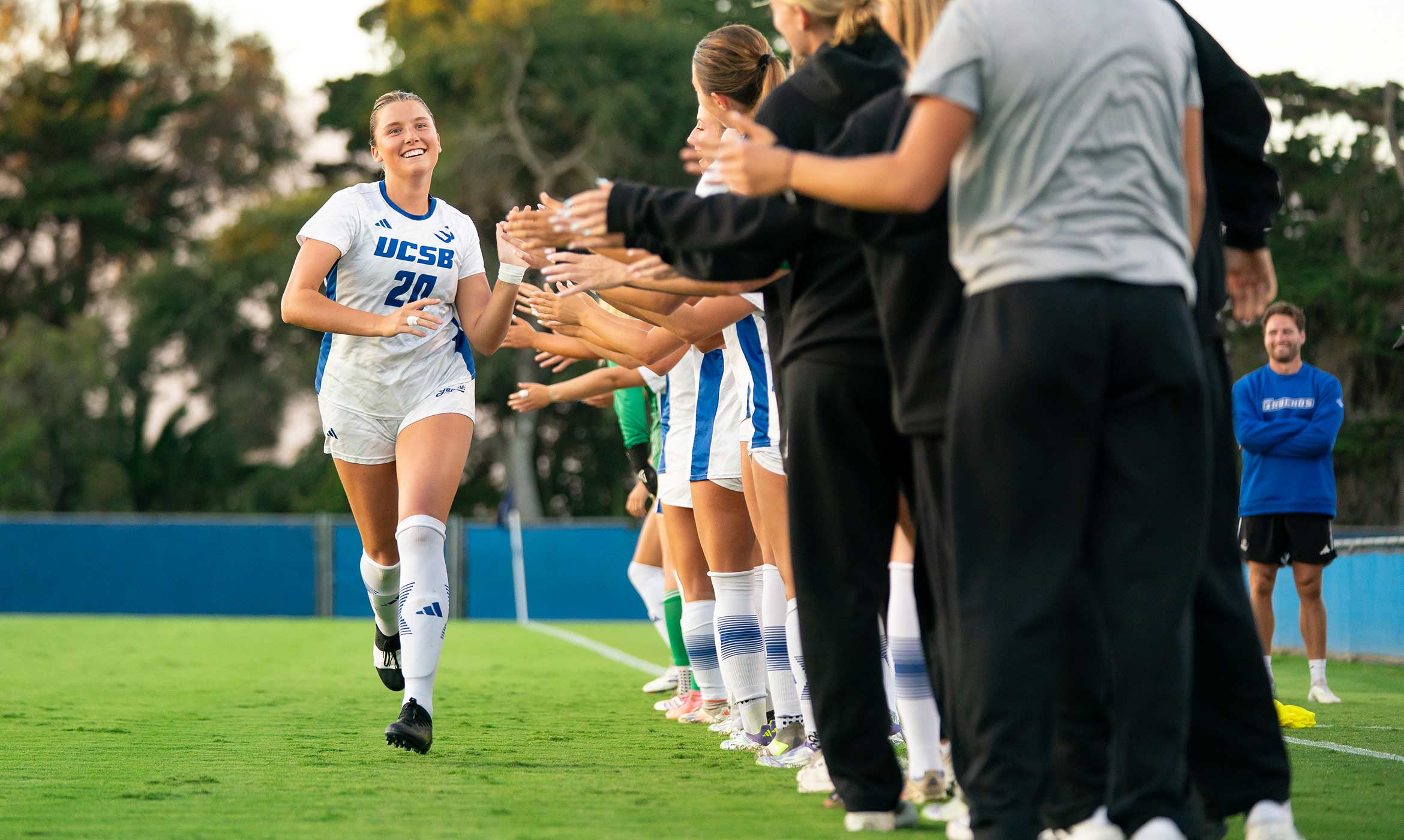
For most college athletes, the first time you step onto the field in your school’s jersey is the moment you’ve dreamed about since you could first kick a ball. For UCSB’s Olivia Howard, that debut was more than the culmination of years of early mornings, late practices and countless games.
It was proof she had turned a challenge into a powerful new chapter in her soccer journey.
LOVE AT FIRST KICK
Howard began playing soccer at a young age and, like many of her teammates, fell quickly in love with the game. By middle school, her passion had sharpened into a goal: She wanted to compete at the college level.
In eighth grade, she attended the NCAA Women’s College Cup and watched Stanford battle in the Final Four. The pace, the skill, the intensity of that match left an imprint.
“This is it. This is what I want to do,” Howard remembers thinking.
Fast forward a few years, and there she was — wearing UCSB blue and gold, standing across from Stanford in the 2024 NCAA Tournament. It wasn’t just another game. It was a full-circle moment, facing the very program that had inspired her dream, now as a competitor.
AN UNWELCOME SURPRISE
Before she could step onto the field as a Gaucho, Howard faced an obstacle she never saw coming. During her incoming physical, the team’s routine echocardiogram revealed Wolff- Parkinson-White syndrome, a congenital heart defect that can trigger dangerous arrhythmias.
“I was in complete shock,” she says. “I felt fine. I had just trained all summer and didn’t think anything was wrong. Honestly, I didn’t want to believe it.”
Multiple doctors delivered the same message: If she wanted to keep playing soccer, she would need heart surgery.
“It was surreal,” Howard says. “I had been in Santa Barbara for just eight days, and suddenly, I was facing the possibility that my dream might be over.”
Surgery came quickly. When she woke, there was a chicken sandwich waiting, along with instructions that she could resume soccer activities in three days. Within a week, she was back on the field.
RECOVERY AND RESILIENCE
Though cleared physically, Howard still faced hurdles.
“It didn’t heal perfectly and was still a little painful,” she says. “The mental side of it was way more challenging. When you wake up from the procedure, nothing feels different.”
On her first day back, head coach Paul Stumpf pulled her out of practice early.
“Paul said, ‘You had a great first day. You’re good. Just sit and rest right now,’” Howard recalls. “I was emotional because I wanted to push through. I already felt three days behind.”
That reassurance became a turning point. If her coach believed she was ready, she knew she could still compete with anyone on the pitch.
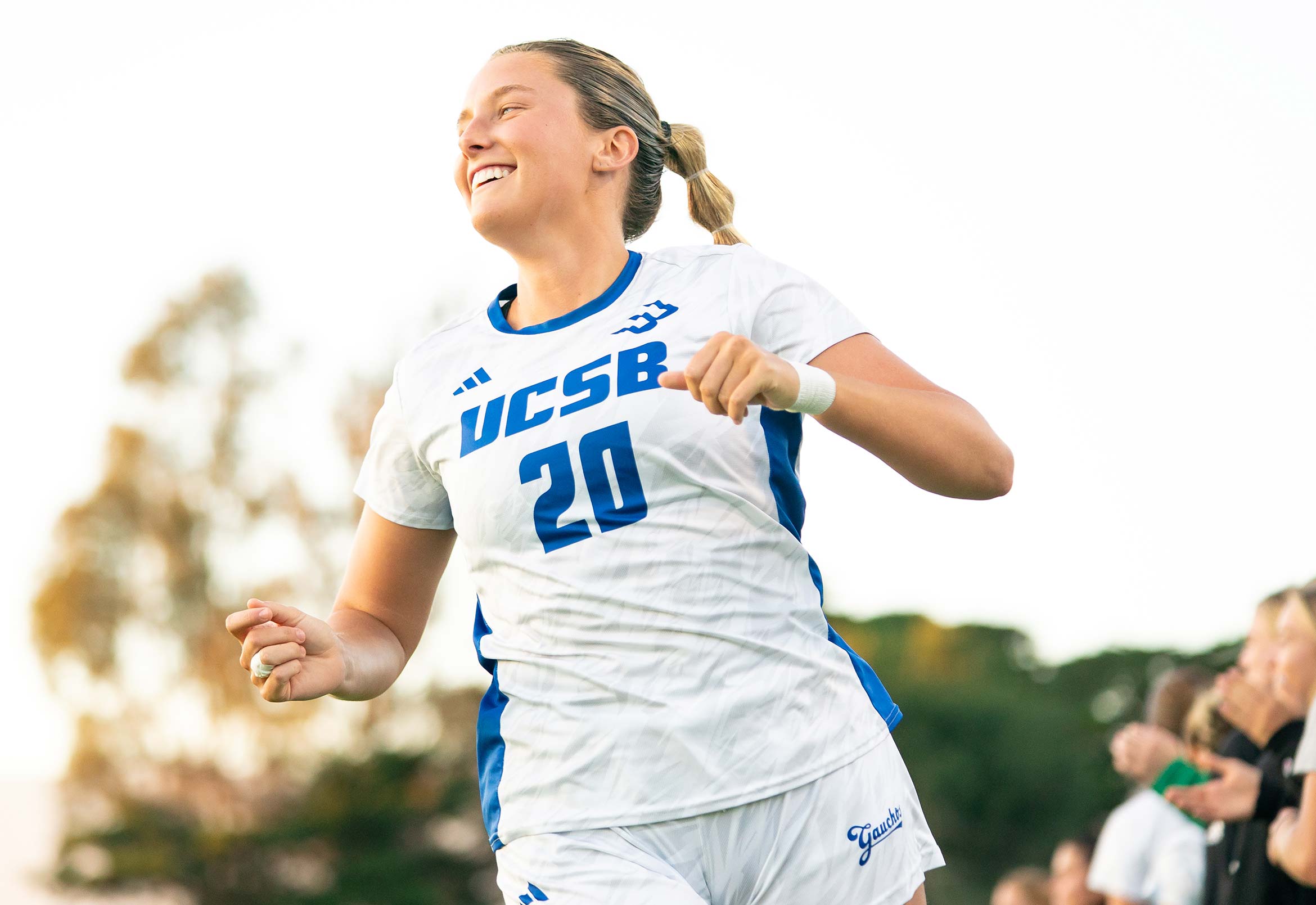
Photo by Jeff Liang
THE STORYBOOK RETURN
Just 17 days after surgery, Howard suited up for her first collegiate match against Loyola Marymount. In the 45th minute of her first half of college soccer, she scored.
“That goal meant everything,” she says. “It was proof I had made it back — that I belonged here.”
From that moment, she played with gratitude. Every sprint, every practice, every game became a gift.
Her support system proved vital. Her parents navigated the medical process, while her coaches and teammates made sure she never felt isolated.
“They understood this was bigger than soccer,” she says. “They told me to focus on getting healthy first. I couldn’t have asked for a better support system.”
Her family has since turned the experience into advocacy, connecting with a Dallas-based foundation that provides affordable EKGs to young athletes and helps families detect hidden heart conditions.
Today, Howard is firmly rooted in Gaucho life. Long bus rides, pregame rituals and team dinners have become the backdrop of lasting friendships.
“I feel really at home here,” she says. “Being a Gaucho is something I was meant for. I can’t imagine being anywhere else.”
Her story is more than a comeback. It is a reminder that some of the toughest victories come before the whistle ever blows — and that the real triumph lies in the courage to keep playing.