PHOTO: MIT MEDIA LAB | JIMMY DAY
Tiny Tech Life Saving Impact
Tiny tech, lifesaving impact
Deblina Sarkar designs nanoscale medical tools that could reshape diagnosis and treatment of disease
by David Silverberg
A smartwatch analyzing cells and detecting diseases. Tiny antennae inside cells to help scientists understand their inner workings. A non-invasive brain implant delivered through the bloodstream.
These aren’t sci-fi fantasies but technologies developed by Deblina Sarkar MS ’10, Ph.D. ’15, an assistant professor at MIT and the AT&T Career Development Chair at the MIT Media Lab. Sarkar specializes in nanoelectronics, designing electronic devices and circuits built from materials just a few nanometers in size — around one billionth of a meter. Her lab’s most recent invention, dubbed CircTrek, is a medical monitoring device powerful enough to detect single cells within blood vessels yet compact enough to wear like a wristwatch. The device can analyze cell function, making an area of healthcare that can be onerous and time-consuming more efficient.
CircTrek works by “seeing” into the bloodstream after a patient receives a harmless fluorescent dye, using light to capture data for multiple applications. For example, during blood cancer treatments like CAR T-cell therapy, it could quickly show doctors whether the therapy is working.
Still in its early stages and tested only in vitro, the device is about three years from reaching patients and hospitals, Sarkar estimates. “Beyond immunotherapy, this device could detect diseases, all of which have cellular biomarkers released into the bloodstream,” Sarkar adds.
Mini antennae and a new kind of brain implant
Sarkar’s deep dive into nanoelectronics has also seen her concoct other technologies with wide-ranging medical implications. In 2022, she developed Cell Rover, a flat antenna that could monitor processes inside cells. Until recently, it’s been an uphill battle for scientists to see within cells, since traditional optical methods, like microscopes, can be blocked by a cell’s natural opacity.
Miniaturized antennae can be used to analyze cell structures, but they generate heat that may end up frying the living cell.
Enter these tiny antennae that use magnetic fields to transmit a signal from inside of a cell without harming it.
“This technology could identify proteins in the brain that may be early signs of Alzheimer’s disease, for example,” Sarkar says.
What gets Sarkar most excited, though, is the technology that won her the 2022 National Institutes of Health (NIH) Director’s New Innovator Award: the first autonomous, nonsurgical brain implant, designed to make such interventions accessible worldwide.
Current procedures require drilling into the skull and inserting a probe — a complex surgery costing hundreds of thousands of dollars — so fewer than 1% of patients benefit from treatments that can stimulate the brain to address neural diseases. Sarkar and her team asked, “What if there were another way to deliver these stimulations for conditions from Parkinson’s to brain injuries to blindness?” Their answer: tiny devices injected into the body that can cross the blood-brain barrier, a protective shield around the brain.
“We then wirelessly power these devices with electromagnetic fields so that it can create very localized and precise electrical stimulation, and it can treat diseases which even existing drugs cannot treat,” she explains.
Demonstrating how effective this nanotechnology could work in animals was the first step, Sarkar adds, and she recently launched the startup Cahira Technologies to scale the injections and bring it to human trials.
"I’m excited by technology that can have a big impact on people’s lives"
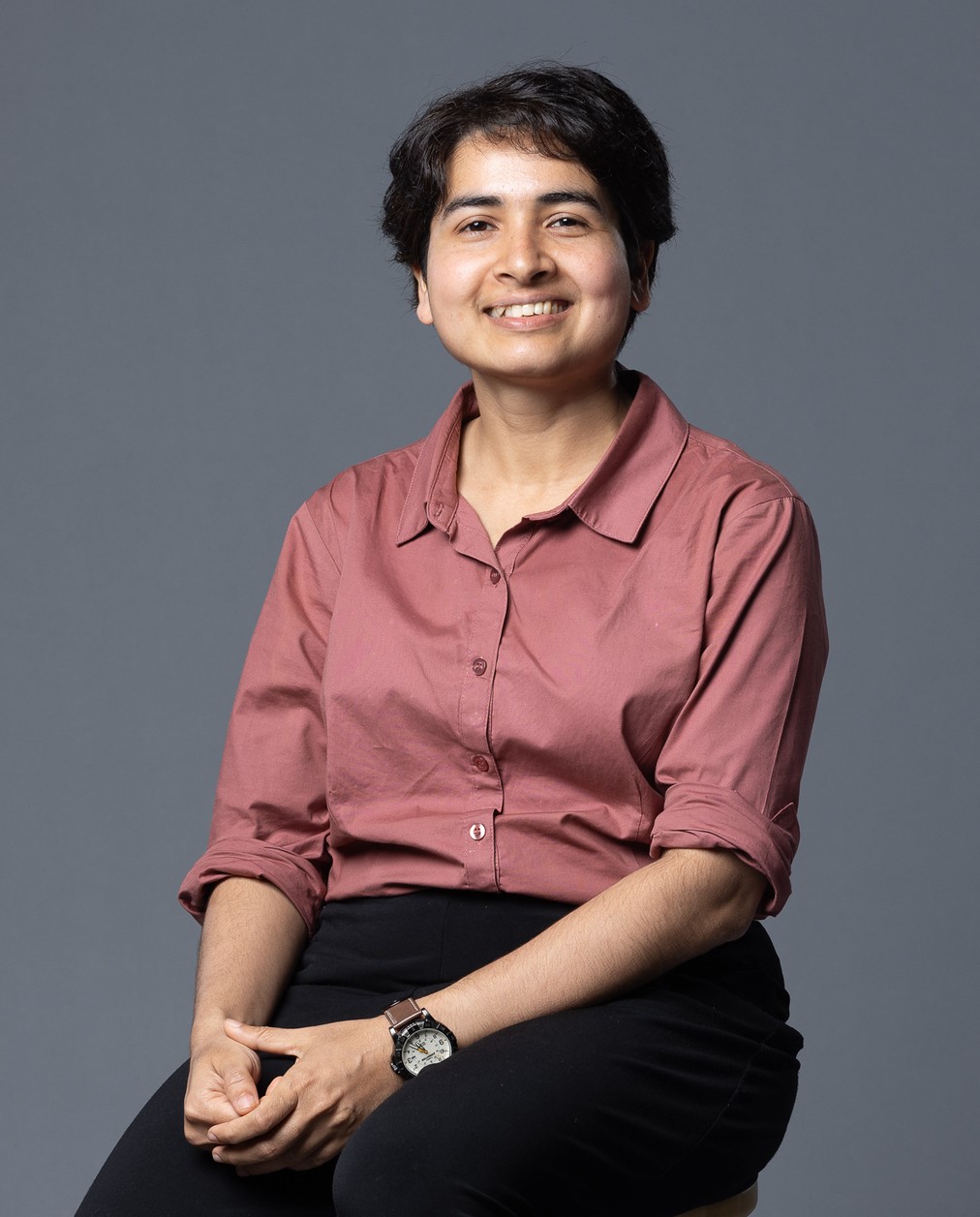
Bringing ‘a fearlessness to intractable problems’
Born in Kolkata, India, Sarkar says she wasn’t interested in biology in high school. “I took statistics because I was more into math, physics, those subjects,” she notes.
At UCSB, while studying for her master’s and Ph.D., she found her passion in nanoelectronic devices. “I’m excited by technology that can have a big impact on people’s lives,” she says, noting that her research on quantum mechanical transistors drew her deeper into the intersections of engineering, physics and nanotechnology could blend into each other.
She credits UCSB’s collaborative environment — and the freedom given by her professor Kaustav Banerjee — for encouraging her to pursue her ideas. “That’s when I realized how much studying the brain fascinates me,” she recalls.
Colleagues praise her work ethic and passion. Ed Boyden, an MIT neurotechnology, says he admires her “amazing abilities and achievements in physics, and her desire to apply them to the daunting problems of the brain.”
He adds, “She brings a fearlessness to intractable problems, as well as her great physics and engineering abilities.”