Photo by Matt Perko
Meet the UCSB student who turned a gap year into 100 countries
Meet the UCSB student who turned a gap year into 100 countries
by Emma Sanchez '28
“BECOME COMFORTABLE WITH BEING UNCOMFORTABLE.”
It’s a phrase Arjun Malaviya adheres to, and urges others to embrace.
For the 19-year-old UC Santa Barbara computer engineering student, discomfort isn’t something to avoid. It’s where growth begins.
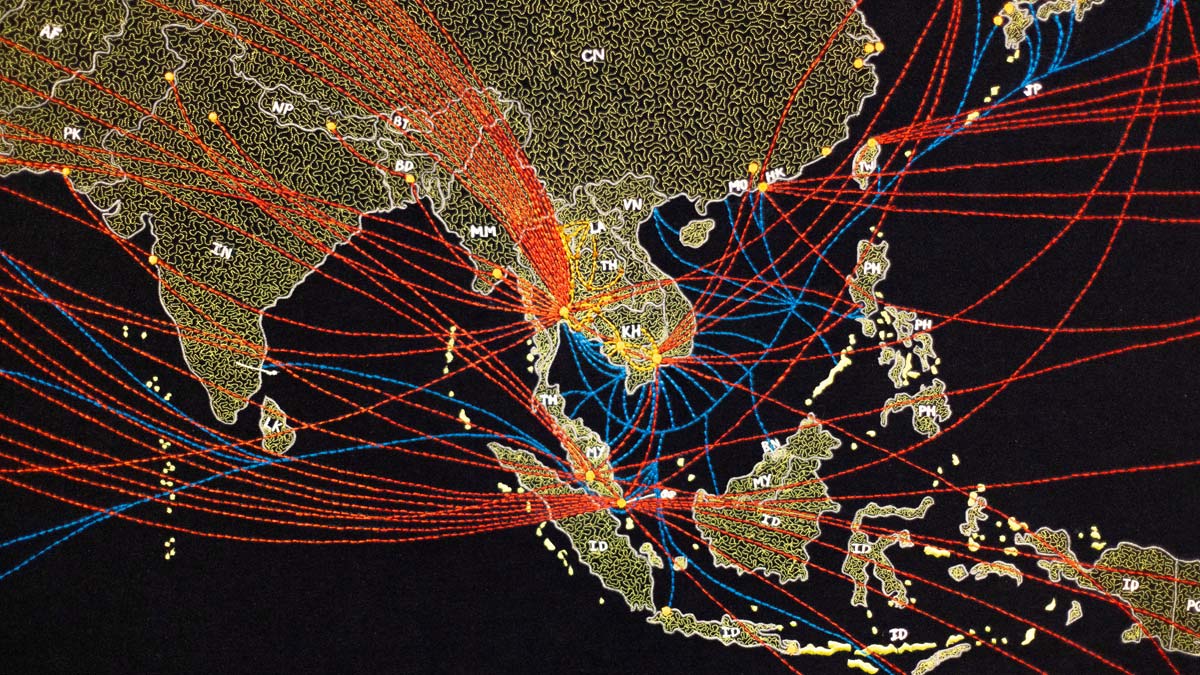
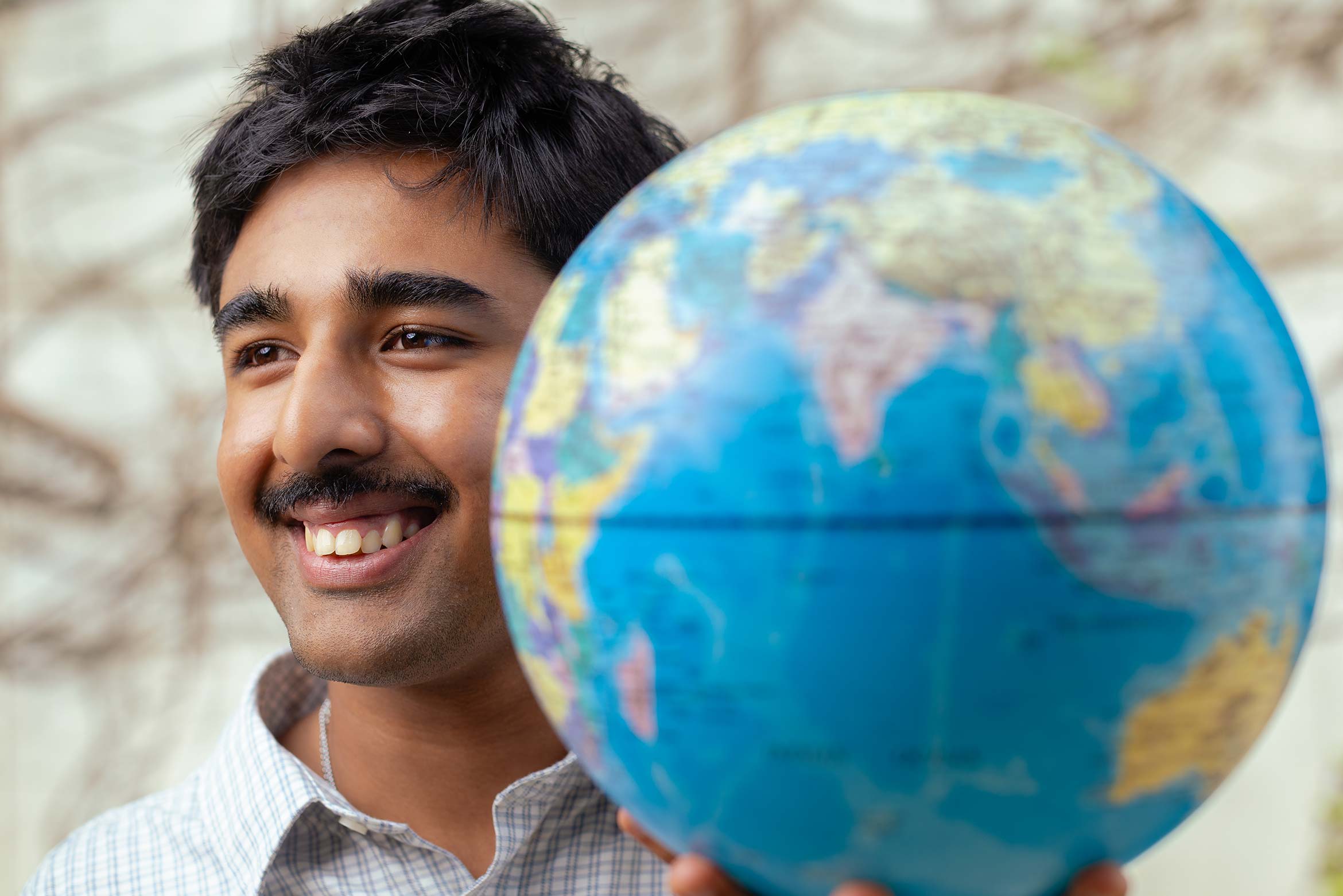
Before arriving at UCSB, Malaviya spent 13 months traveling solo through 100 countries. By 19, he had visited 126 in total. But ask him about the number, and he shrugs it off.
His journey wasn’t built on spontaneity though. During the pandemic, Malaviya enrolled in community college courses at Moorpark College. At the same time, he was quietly saving money — collecting recyclables, working part-time as an administrative assistant and investing his earnings.
Like Malaviya, his parents studied electrical and computer engineering at UCSB. Some of his most vivid memories were made from family trips. On a trip to Peru, he was playing soccer with local kids when he had a life-defining realization. “I just kind of showed up and they were so welcoming,” he says. “They put me on a team and then we played against each other for 45 minutes, and time flew by so fast. It was that kind of experience that motivated me to go out and have even more of those experiences.”
Malaviya was only 16 when he completed his UC transfer credits from Moorpark, but starting university at 16 was not something he envisioned for himself. He remembers thinking, “I don’t want to go into college when I’m 17 as a junior. I want to take a gap year so I don’t burn out.” When he realized he could take a gap year before starting college, he saw it as an opportunity for a different type of education — one that had been forming since childhood.
“I had this money saved up. I had this passion for traveling,” he says. “Why not combine the two?”
He calculated his budget carefully, choosing multi-stop flights at a lower cost, relying on public transportation and eating local street food. When possible, Malaviya also reached out to local hosts directly, sometimes receiving discounted stays once he shared his story. In total, Arjun spent $22,500 over 13 months; he compares it to a year of living costs in Isla Vista.
However, careful planning didn’t eliminate uncertainty. In Moldova, a short bus ride into Ukraine turned into hours spent in a bomb shelter as airstrikes began.
“Those moments shake you,” he says. “But for a year of travel and me going to where I knew some of these things could happen, it was an accepted risk.”

With Taliban members in Afghanistan

With schoolgirls in Damascus, Syria

With local people in Najaf, Iraq

With a local restaurant owner in Damascus, Syria
As he spent more time in communities facing hardship, Malaviya began asking: How can I understand this? How can I help? It wasn’t immediate, but he found himself reconsidering his initial reactions to experiences that were uncomfortable. “If someone tried to rob me,” he says, “could I really judge them? If I was living under an authoritarian government, if I had a family to feed and no opportunities, what would I do?”
The question didn’t excuse harm, but it complicated it. He saw how circumstances shape behavior. This awareness made him quicker to empathize. Despite differences in language, religion and politics, the conversations often circled back to the same core concerns: family, stability, work, opportunity and dignity. The more he traveled, the more his belief solidified: people are more similar than different.
At UCSB, Malaviya recently took ECE 181, an introductory electrical and computer engineering course on computer vision, where he has begun exploring how emerging technologies can be applied to global crises. The class has pushed him to think about how tools like drone imaging and visual analysis could assist regions facing conflict or food insecurity. He sees these technologies as a way for humanitarian organizations to better assess crises in areas where aid workers cannot be present.
“It gives me so much more hope of just being able to analyze situations better,” he explains. “Even if we aren’t there, we could be able to determine how we can best help people.”
For Malaviya, UCSB reflects the same spirit of exploration that defined his travels. “I feel just like when I was exploring different cultures,” he says. “I can explore different subcultures within the campus. If you go and travel and you see the similarities between people and start appreciating different cultures and being more open to different people’s perspectives, then when you come to an environment like this, it enriches your life even more.”
This summer, he plans to travel to regions facing severe humanitarian crises, including Sudan and Somalia, with the goal of contributing in any way he can. He hopes to support efforts that help communities rebuild and strengthen local infrastructure.