by Keith Hamm
Thousands of songs representing some of the rarest and most uniquely American music borne from the Jazz Age and the Great Depression would have likely been lost to landfills and faded from memory. Fans and historians have long credited obsessive record collectors for preserving much of that music, and today they can thank a partnership between UC Santa Barbara and the nonprofit Dust-to-Digital Foundation for making it available to the public for free.
UCSB Library’s Special Research Collections has been uploading music from the foundation’s trove of approximately 50,000 songs to the university’s Discography of American Historical Recordings (DAHR) database. So far, more than 5,000 songs from Dust-to- Digital have been added, says David Seubert, curator of the library’s performing arts collection. Thousands more are in the pipeline.
“The Dust-to-Digital Foundation has digitized some of the most significant private collections in the country,” Seubert adds. “We are pleased to partner with them to make this rare content accessible.”
Cofounded by Lance Ledbetter in 1999, Dust-to- Digital launched as a commercial label focused on preserving hard-to-find music and producing highquality box sets, vinyl records, CDs, DVDs and books that share the detailed stories behind rare recordings. In 2010, Ledbetter and his wife, April, launched the label’s nonprofit foundation.
Over the years, the Ledbetters have worked closely with collectors to digitize and preserve record collections for educational purposes and public consumption. Earning trust and forging those relationships with often-reclusive collectors takes patience and an authentic appreciation of the music and its place in American history, April says. “We share their passion to keep our musical heritage from being forgotten.”
Once a relationship is established, Dust-to-Digital sets up special turntables and laptops in a collector’s home, with paid technicians painstakingly digitizing and labeling each record, one song at a time. Depending on the size of the collection, the process can take months, even years.
Along the way, the Ledbetters’ efforts have earned Grammys for Best Historical Album, in 2007, for “Art of Field Recording Volume 1: Fifty Years of Traditional American Music Documented by Art Rosenbaum”; and, in 2019, for Best Historical Album and Best Liner Notes for the box set “Voices of Mississippi: Artists and Musicians Documented by William Ferris.”
“We’ve built our reputation through storytelling,” Lance says.
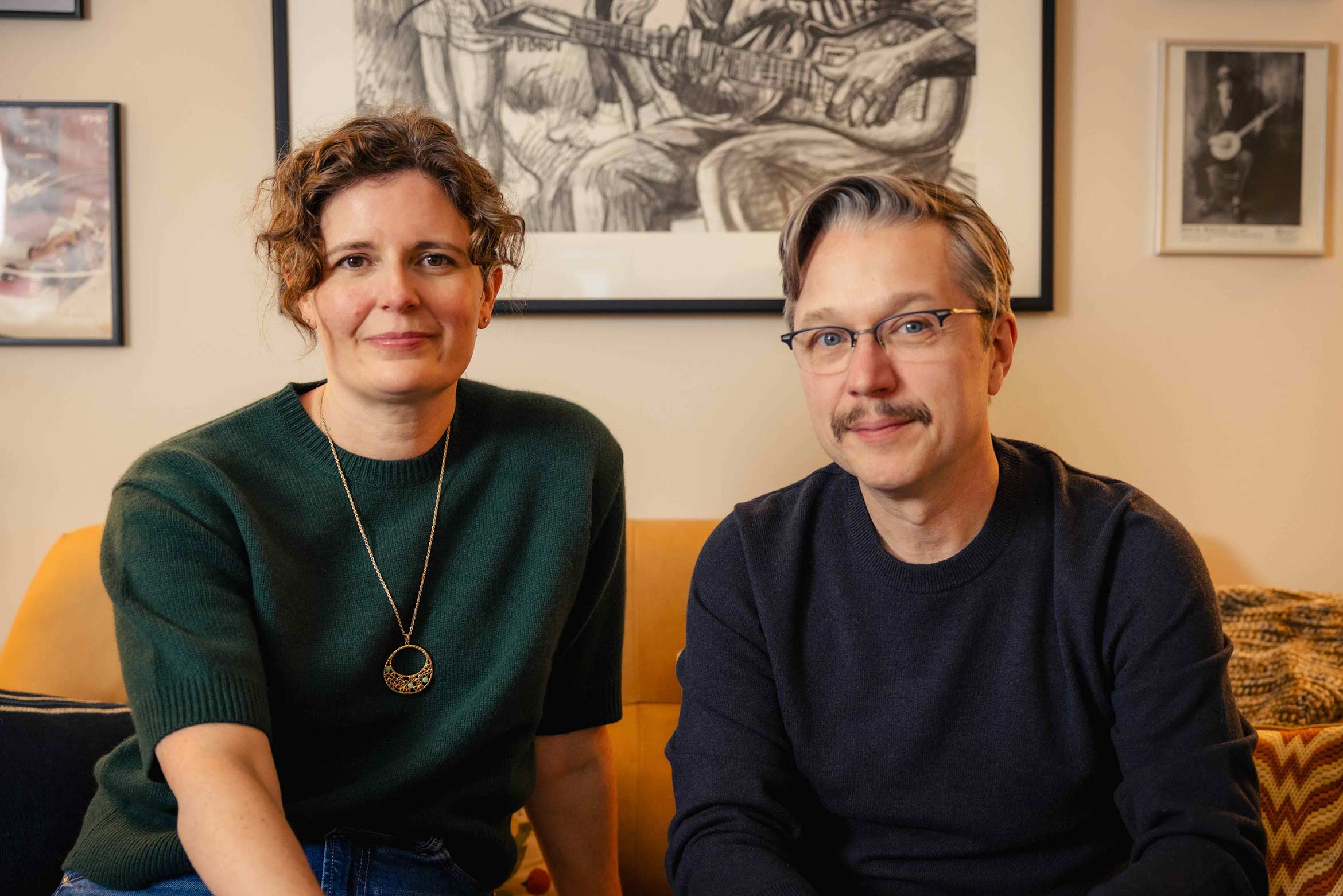
April and Lance Ledbetter - photo by Lizzy Johnston
Seubert describes the library’s partnership with Dust-to-Digital as a symbiotic coming together of an incredible music archive and the university’s established public-access platform.
Launched in 2008 and funded in part by the National Endowment for the Humanities, DAHR (pronounced dar) has documented more than 460,000 master recordings made by record labels during the 78 rpm era, which spanned roughly 60 years starting in the late 1890s. The archive is known for its discographical details, artist bios, free streaming for noncommercial purposes, and the high quality of its digitization in the Henri Temianka Audio Preservation Lab. Recordings in the public domain are also available for free download, in keeping with the UCSB Library’s mission for open access.
“The clarity and sound speaks for itself,” Lance says.